Epoxy Flake Color Options: How Blends Are Chosen for Look and Wear
September 30, 2026
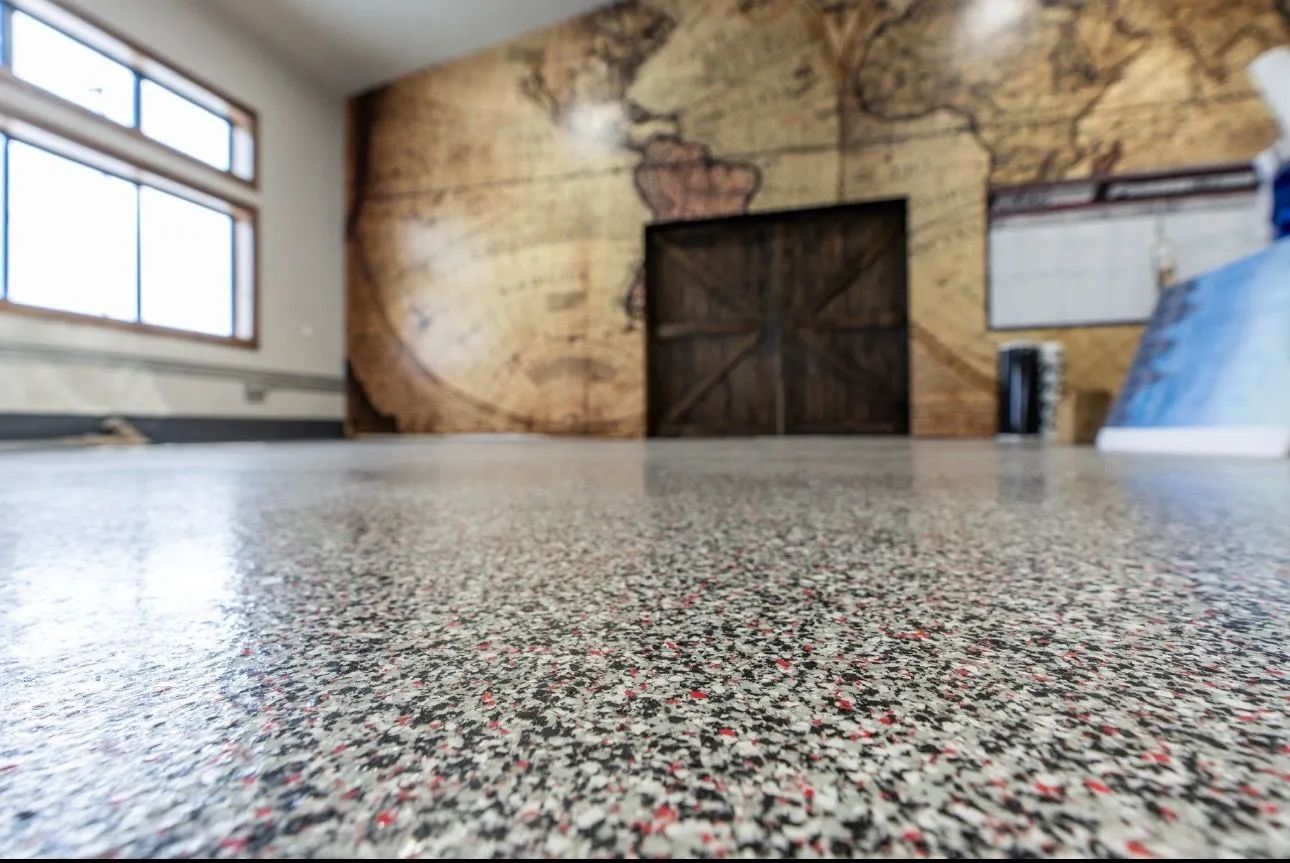
QUICK ANSWER: Epoxy flake blends are chosen by matching flake size, color ratio, and broadcast density to the base coat and the room's lighting. Flakes typically range from about 1/4 inch down to fine chip sizes, and coverage runs from a light scatter to full refusal, where flakes are broadcast until the surface won't hold any more. Multi-color blends of three or four shades read as one cohesive pattern rather than scattered dots, and the broadcast rate directly affects surface texture and grip underfoot. Base coat color should sit in the same tone family as the flakes, since a mismatched base will show through gaps in the pattern.
Picture your own garage for a second. You've got three flake sample boards propped against the workbench, tilting each one toward the open bay door to catch the afternoon light. Under the shop light overhead, the gray-and-charcoal blend looks almost blue. Out in daylight, it warms up and picks up flecks of tan you never noticed indoors. That's the moment most homeowners don't see coming: the sample board and the finished floor rarely look identical, because light source, room size, and what's already on the walls all change how a blend reads.
Choosing a flake blend isn't just a color decision. It's flake size, color ratio, and how densely the flakes get broadcast into wet epoxy, all working together. Line those three up with the room and the base coat, and the floor reads as intentional. Get them wrong, and even a well-installed coating looks flat or busy.
What flake blends are actually made of
Decorative flooring flakes are thin chips of vinyl or acrylic material, colored and sized specifically for broadcasting into wet epoxy. They're manufactured, not random scraps, which is why a bag labeled with a blend name produces a consistent look from one project to the next. A single "blend" usually mixes three or four base colors in set proportions - something like a charcoal, a warm gray, a cream, and a black accent chip - so the eye reads a unified pattern rather than individual dots of color.
Size matters more than most people expect
Flake chips run from roughly a quarter inch down to much smaller fragments sometimes called "chips" or "fines." Larger flakes create a bolder, more visible pattern with fewer pieces needed to cover the floor. Smaller flakes blend together into a finer, more uniform texture that reads almost like natural stone from a few feet away. Mixing flake sizes within one project generally doesn't work well, because smaller pieces settle beneath larger ones during broadcast and get buried in the topcoat instead of showing on the surface.
Broadcast density is the other lever
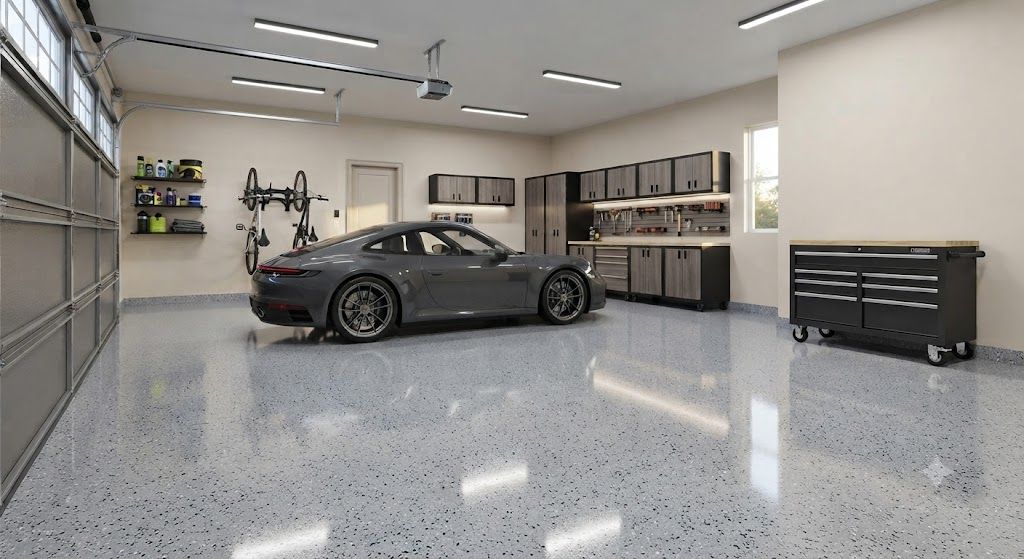
A light broadcast leaves visible gaps of base coat color between flakes - useful when the base coat itself is doing a lot of the visual work. A heavier broadcast, sometimes called a full refusal, means flakes are thrown until the surface is completely covered and won't accept any more. Full refusal produces the most uniform, textured look and is standard for garages and shops that need consistent slip resistance across the whole floor. Between those extremes, medium coverage lets some base coat peek through for a more mottled, natural effect.
Matching the blend to the base coat
The base coat isn't just a background color - it's part of the finished pattern, since flake broadcasts almost never achieve 100 percent edge-to-edge coverage even at full refusal. Small gaps and the underside color coming through between chips mean the base coat tone needs to sit close to the flake colors, not fight them.
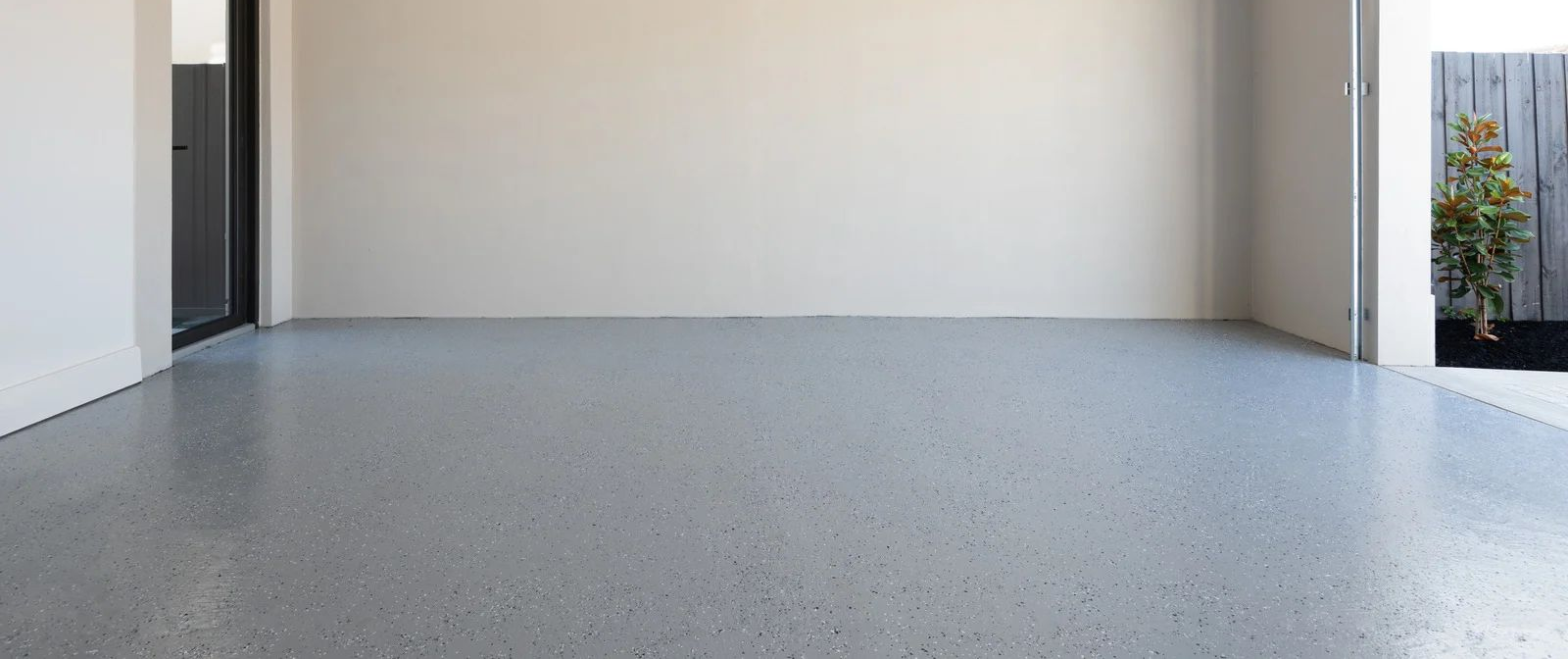
A cool gray base under a gray-and-black flake blend disappears into the pattern. The same gray base under a warm tan-and-brown blend creates a visible color clash wherever the base peeks through. This is why installers typically pick the base coat after settling on the flake blend, not the other way around. If a floor leans warm - tans, browns, terracotta accents - the base should lean warm too. Cool blends of grays, blacks, and silvers pair with a neutral gray or charcoal base.
Reading a room before picking a color
Lighting changes color more than most homeowners plan for, and it's the single biggest reason a flake sample looks different once installed. A garage lit mostly by a single overhead fixture or the light coming through a bay door reads differently than a finished basement with recessed LED cans, and a walkout lower level with big windows facing a lake view reads differently still. Around the Lake of the Ozarks, a lot of finished basements and lower-level rec rooms get more natural light than a typical basement would, thanks to walkout designs built into hillside lots - which means flake colors chosen under a showroom light can look noticeably different once the room has daylight bouncing off the water outside.
A general pattern holds across most rooms. Warm, LED, or incandescent lighting pulls out the warmer tones in a blend and can make cool grays look slightly blue. Natural daylight is the most neutral reference point for judging a sample. But if all you've got is a small chip under a hardware store fluorescent tube, know that the finished floor will likely look warmer and richer than that chip ever suggested.
Room size and how the space gets used matter too. Small or enclosed spaces, like a single-car garage or a compact basement stairwell, tend to feel larger with lighter, cooler blends, since dark flooring visually shrinks a room. Larger open spaces - a three-car garage, a finished walkout basement, a shop floor - can carry darker or busier blends without feeling cramped, and dark blends do a better job of hiding tire marks, tool drops, and everyday grime between cleanings.
Style categories that show up again and again
Most flake blend choices fall into a handful of recognizable categories, and knowing the category helps narrow dozens of options down to a short list fast.
Neutral And Modern
Grays, blacks, whites, and silvers in varying combinations. This is the most requested category for garages, and it pairs with almost any wall color or cabinetry finish, which is part of why it stays popular.
Warm And Traditional
Tans, browns, beiges, and earth tones. These blends tend to show up in finished basements, dens, and spaces meant to feel warmer and less clinical than a garage floor.
High-Contrast Accent Blends
A dominant neutral color paired with one or two bright accent chips - a red, blue, or green fleck scattered through an otherwise gray or black field. These work well in commercial and hobby spaces where a business or homeowner wants a signature look, but they read as busier and are worth viewing on a larger sample board before committing, since a small chip doesn't show the full effect of an accent color at scale.
Stone-Look Blends
Fine, tightly mixed multi-tone chips designed to mimic natural granite or terrazzo from a normal viewing distance. These tend to work best with a full-refusal broadcast, since the effect depends on dense, even coverage.
TIP: Ask to see a flake sample under the actual lighting condition the floor will live in - garage bay light, basement can lights, or daylight through a walkout door - rather than judging from a small chip under showroom lighting alone.
Texture and how it affects the floor day to day
Flake broadcasting does more than add color. A heavier broadcast raises the surface texture slightly compared to a smooth solid-color coat, and that texture plays a real role in slip resistance. Industry testing for hard-surface flooring, including resinous and epoxy systems, measures slip resistance as a dynamic coefficient of friction, with a commonly cited minimum benchmark of 0.42 for interior floors under current testing standards. Broadcast aggregates like decorative flake are one of the standard ways coating manufacturers raise a floor's measured slip resistance above a smooth, unbroadcast surface, alongside options like fine aluminum oxide grit blended into the topcoat.
Texture and topcoat thickness interact in a way that's easy to miss, though. A thinner clear topcoat over the flakes leaves more texture exposed, which helps grip but shows every bit of dirt and grit tracked across it. A thicker topcoat smooths the surface for easier mopping and a glossier look, but reduces the tactile texture somewhat. Garages, shops, and pool-adjacent spaces - anywhere wet feet, wet tires, or wet tools are common - generally do better with a broadcast heavy enough to hold texture even after the topcoat goes on.
WARNING: A glossy, high-build topcoat over a light flake broadcast can leave a smooth floor with very little actual grip, even though the flakes are visible. If slip resistance matters for the space, ask specifically about broadcast density and topcoat texture rather than judging by how the flakes look in a photo.
Where flake fits among other coating options
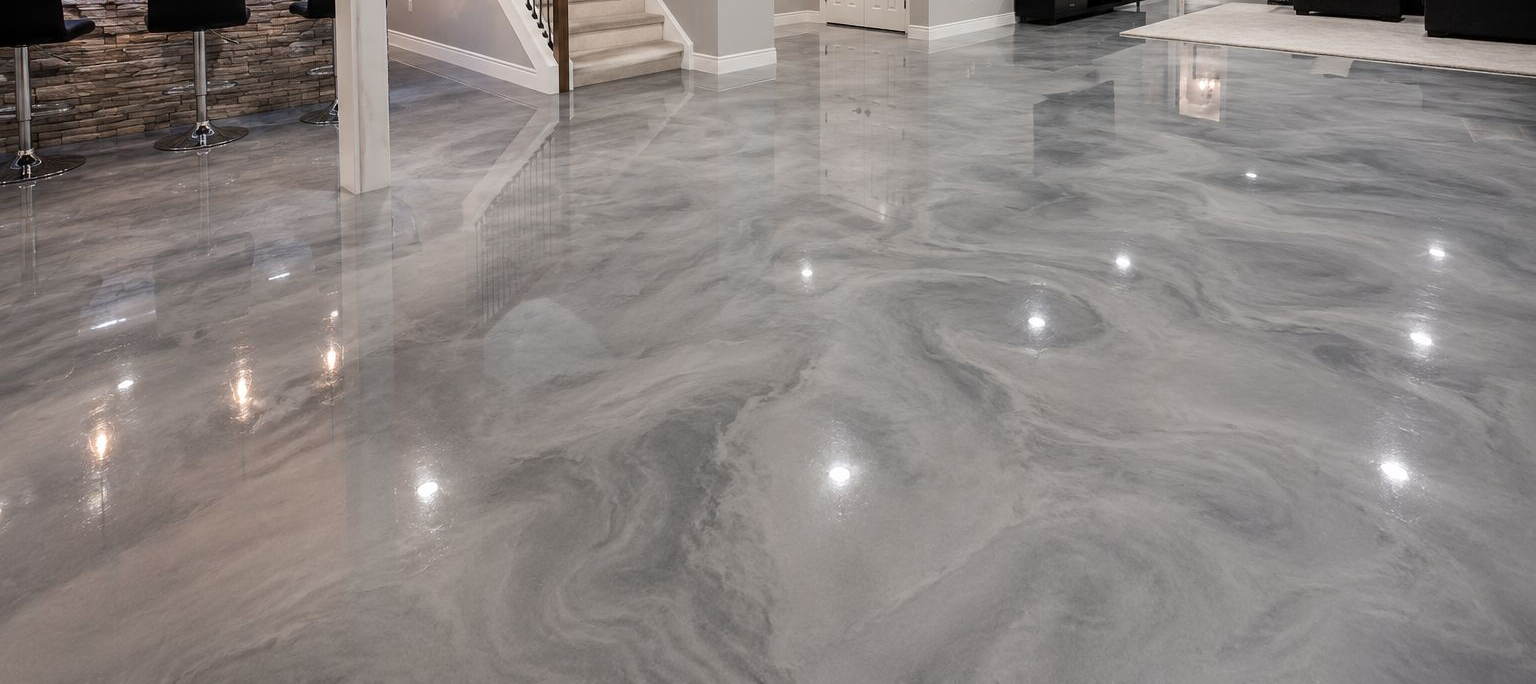
Flake isn't the only way to add color and durability to a concrete floor, and it isn't always the right call. A solid color epoxy floor gives a clean, uniform look without a broadcast pattern, which some homeowners prefer for a more minimalist garage or workshop. Metallic epoxy creates a marbled, almost three-dimensional effect using pigments instead of chips, popular for showroom-style garages and statement basement floors. Quartz broadcast systems use colored sand-like aggregate instead of vinyl flake and tend to show up more in commercial and industrial settings where heavy foot and equipment traffic call for a different wear profile. For outdoor concrete - patios, pool decks, walkways exposed to sun and Missouri's freeze-thaw swings - the coating chemistry and flake type used often differ from an indoor garage system, since UV exposure and temperature cycling change how a coating needs to perform over time.
Knowing where flake fits relative to these other systems helps set expectations. It's the right call when you want a durable, textured, patterned floor that shrugs off spills and tire marks, and when you want some say over color and finish. It's less suited to spaces where a perfectly uniform, glass-smooth solid color is the priority, or where the metallic marbling look is the goal.
None of these systems are interchangeable once installed. Picking the wrong one for the space usually shows up as buyer's remorse a year later, not a functional problem.
Frequently Asked Questions
How many flake colors are usually blended together?
Most manufactured blends combine three or four colors in fixed proportions, creating a cohesive pattern. Blends with one dominant color and one or two accent chips are also common when an accent should stand out.
Does a darker flake blend hide dirt better than a lighter one?
Generally yes. Darker, more varied blends camouflage tire marks, tool drops, and everyday grime better than light or single-tone blends, where scuffs show more. That is why busier blends are common in garages and shops.
Can flake color be changed once a coating is installed?
No. Once flakes are broadcast into the base coat and sealed under a topcoat, the pattern is locked in. Changing it means removing the coating system, so compare samples under real lighting before installation day.
Does flake size affect how long a floor lasts?
Flake size mostly affects the visual pattern. Durability comes from surface prep, the epoxy base coat, and the protective topcoat. Broadcast density still shapes texture and grip, which affects how the floor performs over time.
What's the difference between a light broadcast and full refusal?
A light broadcast leaves gaps of base coat showing between flakes for a mottled look. Full refusal means flakes are added until the surface accepts no more, creating the most consistent, textured finish for garages.
Will the flake color look the same in every room of the house?
Not necessarily. Lighting source and room size shift how a blend appears. A blend chosen under garage lights can look different under warm basement LEDs or walkout daylight, so view samples in the actual space.
Finding a Flake Blend That Truly Fits
Flake color is one of the few choices in a concrete coating project that is purely about looks, yet it becomes permanent the moment the topcoat cures. Viewing samples under the room's real lighting, matching the base coat to the blend, and thinking honestly about how the space really gets used all shape whether the floor feels right years later. A little patience at the sample board stage saves a lot of second-guessing once the coating is locked in place.
At Honey Badger Concrete Coatings
in Camdenton, Missouri, we bring 10+ years of experience to garages, walkout basements, shops, and lake homes around the Lake of the Ozarks. Over that time, we have watched the same blend look cool under a shop light and warm in afternoon sun reflecting off the water. When size, color ratio, broadcast density, and base coat all work together, the finished floor simply looks like it was always meant to be part of the room.