Basement Epoxy vs. Carpet vs. Vinyl: Which Wins in a Missouri Humidity Test
June 23, 2026

You pulled up the old carpet after last summer and found what you suspected: black mold threading through the pad, a musty smell baked into the concrete, and a floor that held moisture like a sponge for weeks. Now you are standing in an empty basement in the Ozarks, trying to decide what to put back down. You have three real options in front of you: epoxy coating, carpet, and luxury vinyl plank. Each one has a vocal fan base online, but most of those reviews come from people in Phoenix or Seattle. Missouri humidity does not care about reviews written in dry climates.
After coating and inspecting hundreds of basement floors across the Lake of the Ozarks region, we can tell you clearly that flooring choice is not just a preference question here. It is a performance question. Relative humidity in a Missouri basement regularly swings between 60 and 85 percent during summer, and that swing determines which materials hold up, which ones degrade quietly, and which ones turn into a remediation job inside of three years.
How Missouri Humidity Actually Destroys Basement Floors
The mechanism behind basement flooring failure in this region is vapor transmission, not just surface moisture. Concrete is porous. Even a slab that looks and feels dry is constantly passing water vapor upward from the soil below. In the Ozarks, where soil holds significant moisture from spring rains and the water table runs shallow in many areas around Camdenton, that vapor pressure can push 3 to 12 pounds of moisture per 1,000 square feet per 24 hours through an untreated slab.
Carpet has no resistance to vapor transmission at all. The pad absorbs moisture, the backing holds it, and the fibers trap it at the surface. At 70 percent relative humidity, most carpet installations in a Missouri basement will show microbial growth within 12 to 18 months. You may not see it, but it is growing in the pad.
Luxury vinyl plank is waterproof at the surface but not at the seams or the subfloor beneath it. When vapor rises through a concrete slab and has nowhere to go, it pools under the floating LVP planks. You will hear the floor bubble underfoot first, then see the edges lift, then find the mold that has been growing in the dark space underneath for a full season.
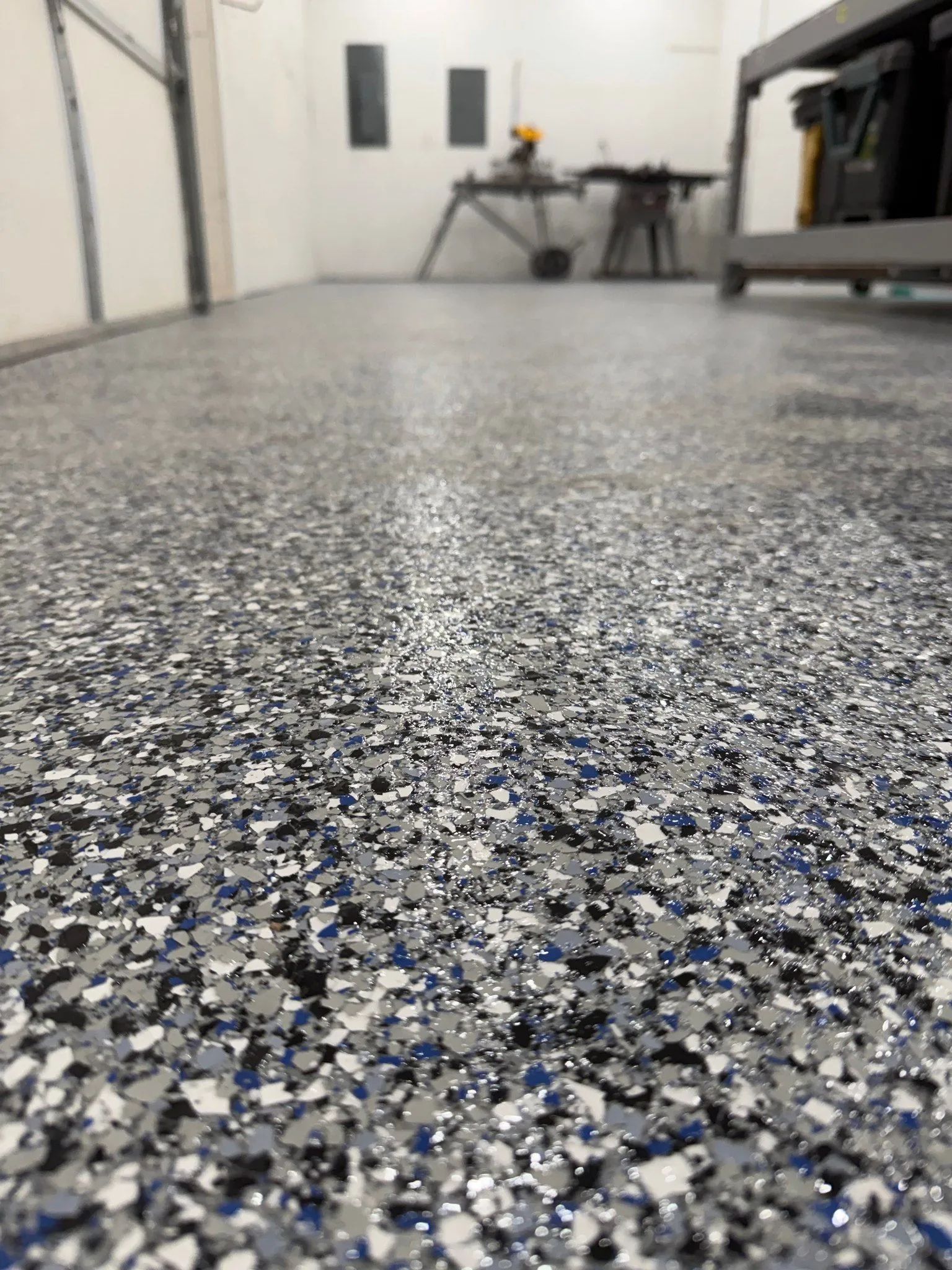
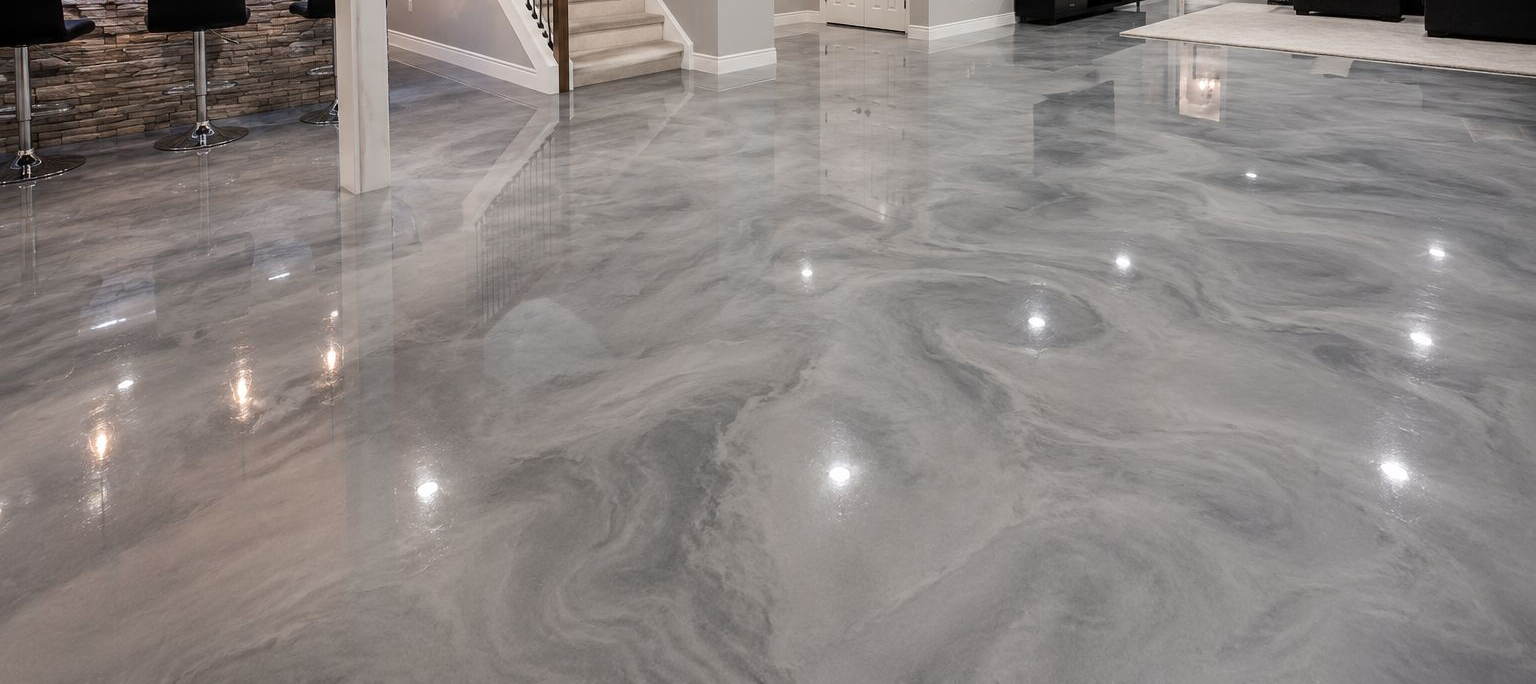
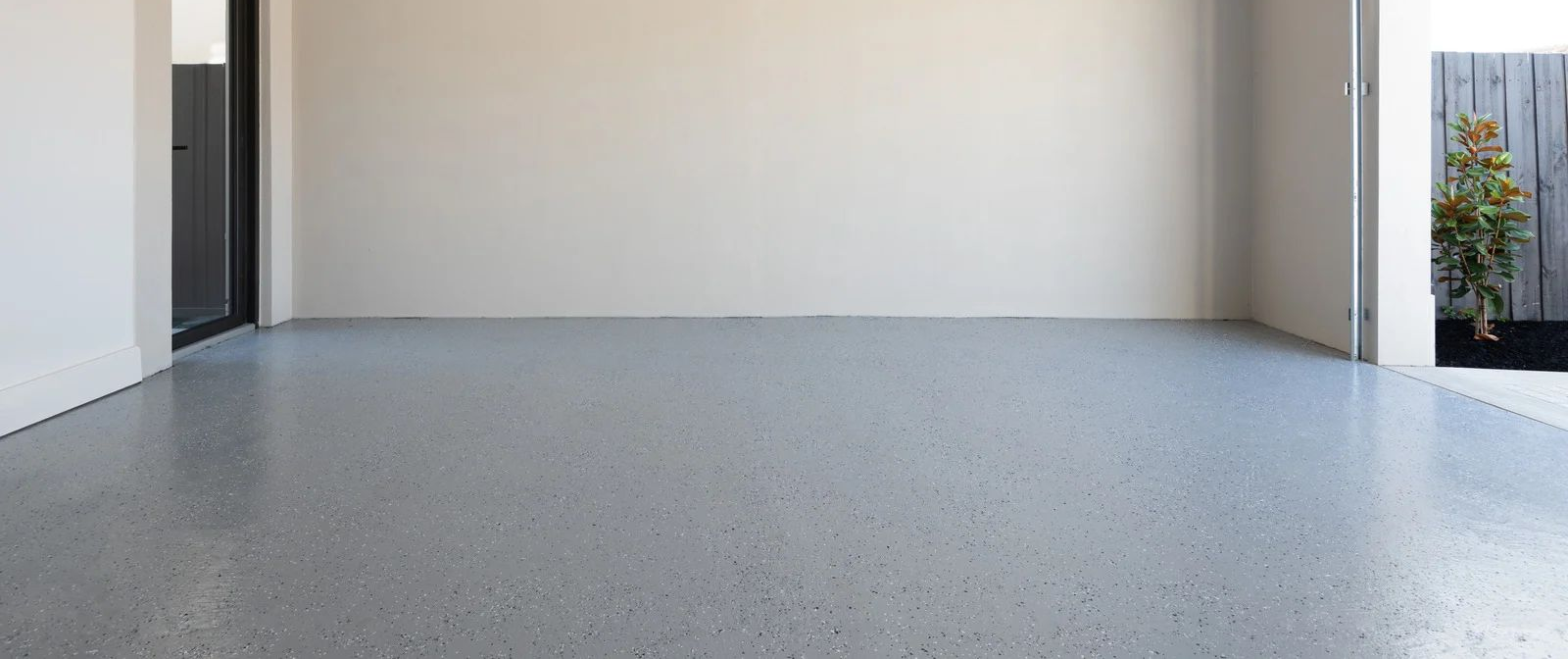
Epoxy applied correctly to a properly prepared slab chemically bonds to the concrete surface and creates a vapor barrier from below, not just water resistance from above. A two-part epoxy system with a moisture-mitigating primer reduces vapor transmission to under 3 pounds per 1,000 square feet per day, which is below the threshold where most adhesion failures and biological growth occur.
That single performance difference explains most of what we see on basement floor service calls in this area.
Side-by-Side Performance Breakdown
| Factor | Epoxy Coating | Luxury Vinyl Plank | Carpet |
|---|---|---|---|
| Vapor barrier capability | Yes, with proper primer | No, traps vapor below | No |
| Mold resistance | High | Medium (surface only) | Low |
| Flood recovery | Wipe down and done | Often requires full replacement | Always requires replacement |
| Expected lifespan in MO basement | 10 to 15 years | 4 to 8 years | 2 to 5 years |
| Comfort underfoot | Hard, can add mats | Medium | Soft |
| Finished look | Seamless, customizable | Looks like wood or tile | Warm, residential |
| Failure mode | Peeling if prep was poor | Bubbling, edge lift | Mold, odor |
| Post-flood remediation need | None | Likely | Certain |
| Humidity sensitivity | Very low | Medium | Very high |
Where Carpet Still Gets Chosen (And Why It Usually Fails Here)
Carpet wins on comfort and upfront cost, and those two things drive a lot of decisions. We understand it. A finished basement with carpet feels livable in a way that bare concrete or a shiny epoxy floor does not, at least initially.
The problem is that Missouri basements flood. Not always catastrophically, but the Ozarks region sees heavy spring rainfall, and many homes around Lake of the Ozarks sit on terrain where water finds paths of least resistance directly toward the foundation. A half inch of water intrusion destroys a carpet installation completely. The pad is not salvageable. The carpet itself holds contaminated water in its fibers even after it dries to the touch, which is why odor returns every summer.
We have gone into basements where carpet was installed three times in eight years because the owner kept replacing what flood water and humidity destroyed. The cumulative spend on those three carpet installations exceeded what a professionally coated floor would have cost at the start.
TIP: Before committing to any flooring, perform a 24-hour plastic sheet moisture test on your slab. Tape a 2-foot-by-2-foot piece of clear plastic directly to the concrete with all edges sealed. If you see condensation on the underside after 24 hours, your slab is actively transmitting vapor and any flooring without a vapor barrier will underperform.
Why Vinyl Plank Performs Better Than Carpet But Still Falls Short
LVP has genuinely improved over the past decade. The core materials are waterproof, the surfaces resist standing water, and the visual options are much better than what was available five years ago. For a bathroom, a laundry room, or an above-grade living space, LVP is a strong choice.
In a Missouri basement, LVP earns a conditional grade. The planks themselves do not absorb water, but they are installed as a floating floor, meaning they sit on top of the slab rather than bonding to it. That gap, typically 3 to 6 millimeters, becomes a collection point for vapor. When humidity rises in summer and then drops in fall, you get a repeated cycle of expansion and contraction that works the seams open over time. Once the seams open, water and vapor enter freely, and the mold begins underneath where you cannot see it.
LVP also requires a subfloor or underlayment in most installations, and that underlayment is another organic material sitting in a humid environment. We have pulled up LVP in Camdenton-area basements and found the underlayment completely saturated even when the LVP surface looked fine.
WARNING: If you find dark staining, a musty odor, or soft spots in an existing LVP basement floor, do not sand or disturb the underlayment without personal protective equipment. Mold colonies at that stage are releasing spores, and concentrated disturbance in a confined space creates a genuine inhalation hazard.
What Makes Epoxy the Technical Winner in This Climate
Epoxy wins the Missouri humidity test not because it is the most comfortable or the cheapest option, but because it is the only one of the three that addresses the source of the problem rather than sitting on top of it.
A properly installed epoxy system starts with mechanical preparation of the slab, typically diamond grinding to open the concrete surface and remove any existing sealers, paint, or contamination. Surface profile matters: the Concrete Surface Profile standard for epoxy adhesion requires a minimum CSP 3, which is roughly the texture of medium-grit sandpaper. Without that profile, even premium epoxy will peel within a year.
The next step is a moisture-mitigating primer for any slab reading above 75 percent relative humidity or above 5 pounds of moisture vapor emission. That primer penetrates the pores of the concrete and chemically reacts to slow vapor transmission. The broadcast epoxy coat and topcoat follow, creating a system that is bonded to the slab rather than floating above it.
The result is a floor that handles a half inch of water intrusion with a mop and a shop vac. No replacement. No remediation. No insurance claim. That practical advantage matters significantly in a region where water intrusion is a recurring reality rather than a rare event.
Serving Camdenton Homeowners With Expert Basement Coating Work
Flooring decisions that work everywhere else in a house do not automatically translate to a Missouri basement. The humidity cycles here are real, the water intrusion risk is real, and the consequences of choosing a material that cannot handle vapor transmission show up within a few seasons rather than decades. Epoxy is not the right choice because it is the newest or the trendiest option. It is the right choice because it is the only one of the three that addresses concrete vapor transmission directly, which is the actual problem in most Ozarks basements.
Honey Badger Concrete Coatings
has been coating basement floors across the Lake of the Ozarks region for over 10
years. We serve all across Camdenton, Missouri, and the surrounding areas, bringing the same prep-first approach to every project. If your basement floor has failed twice or you are starting fresh after pulling up old carpet, we can walk you through exactly what your slab needs before any coating goes down.
Frequently Asked Questions
Can I install epoxy over an existing painted basement floor?
Paint must be removed before epoxy goes down. Epoxy bonds to concrete, not to paint. Any remaining paint causes peeling because adhesion is only as strong as the weakest layer beneath. Mechanical grinding removes paint and opens the concrete surface simultaneously.
How long does a basement epoxy floor take to cure before I can use it?
A standard two-part epoxy system is walkable within 24 hours and ready for full use within 72 hours. Full chemical cure takes 7 days. Avoid heavy rolling loads that first week. Cold Missouri winters below 55 degrees Fahrenheit significantly slow the curing process.
Does epoxy make a basement floor slippery when wet?
A high-gloss epoxy topcoat is slippery when wet without additives. Most residential installations include an aluminum oxide broadcast into the topcoat before it cures. This creates a slip-resistant surface that still cleans easily. Always ask about slip additives before your installation begins.
What happens to LVP in a Missouri basement after a flood?
LVP planks survive minor flooding at the surface, but the underlayment beneath absorbs water and becomes a mold substrate. After any flooding event, lift the planks and inspect the underlayment before reinstalling. Skipping that step causes persistent odor problems even after visible water disappears.
Is carpet ever the right choice for a Missouri basement?
Carpet works only in a fully conditioned basement with continuous dehumidification, no water intrusion history, and active HVAC supply air. Without those conditions, Missouri humidity and seasonal moisture make carpet a temporary installation that typically needs full replacement within three to five years.